TNT Painting & Remodeling LLC is a family-owned and operated painting and remodeling company serving Hartford and surrounding Central Iowa communities. With more than 15 years of experience, the company provides residential and commercial improvement services built on honesty, reliability, and quality workmanship. Licensed and insured, TNT Painting & Remodeling gives you the confidence that your project is handled by professionals who've built their reputation on doing work right.
What sets this company apart is a straightforward approach that focuses on solving your actual problems rather than pushing unnecessary services. You'll work with a team that listens to what you need, assesses the scope honestly, and recommends practical solutions. Whether you're updating a single room or planning a full commercial refresh, you receive the same careful attention to what will work best for your space and budget.
Every project begins with careful preparation—the foundation of work that lasts. Surface prep isn't rushed, materials are chosen for durability and performance, and the team doesn't move to the next phase until the current one meets their standards. This attention to detail during every stage means fewer callbacks, better results, and finishes that hold up to daily use.
Reach out to TNT Painting & Remodeling to discuss your upcoming project and receive a free estimate.
Walls Ready for Finishing Coats
Drywall Installation and Repair in Des Moines for new construction, remodeling projects, and damage from holes, cracks, or water exposure
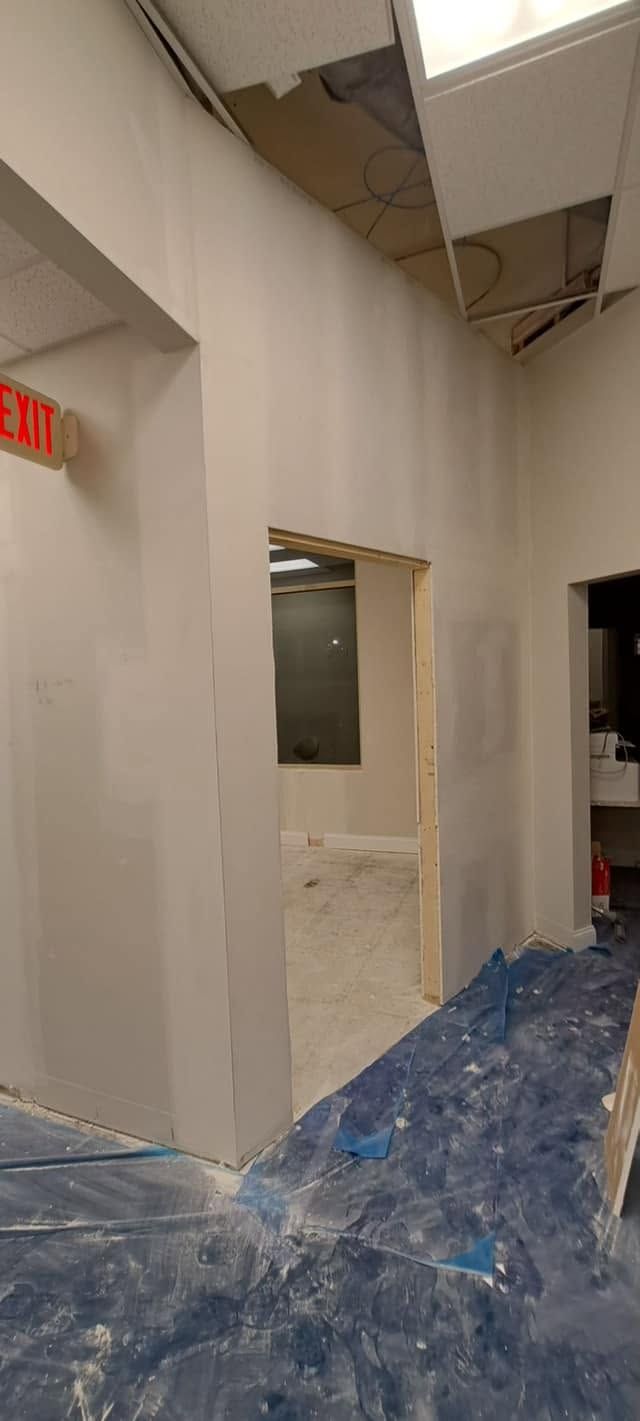
Visible seams between drywall panels and uneven joint compound create shadows that show through paint, no matter how many coats are applied. Drywall installation for new construction, additions, and remodeling in Des Moines involves hanging panels, taping seams, applying joint compound in successive coats, and sanding smooth so the wall surface is continuous without ridges or depressions. TNT Painting & Remodeling LLC handles drywall repairs for holes, cracks, water damage, and everyday wear, preparing surfaces so they are ready for texture matching and paint application without visible evidence of the repair.
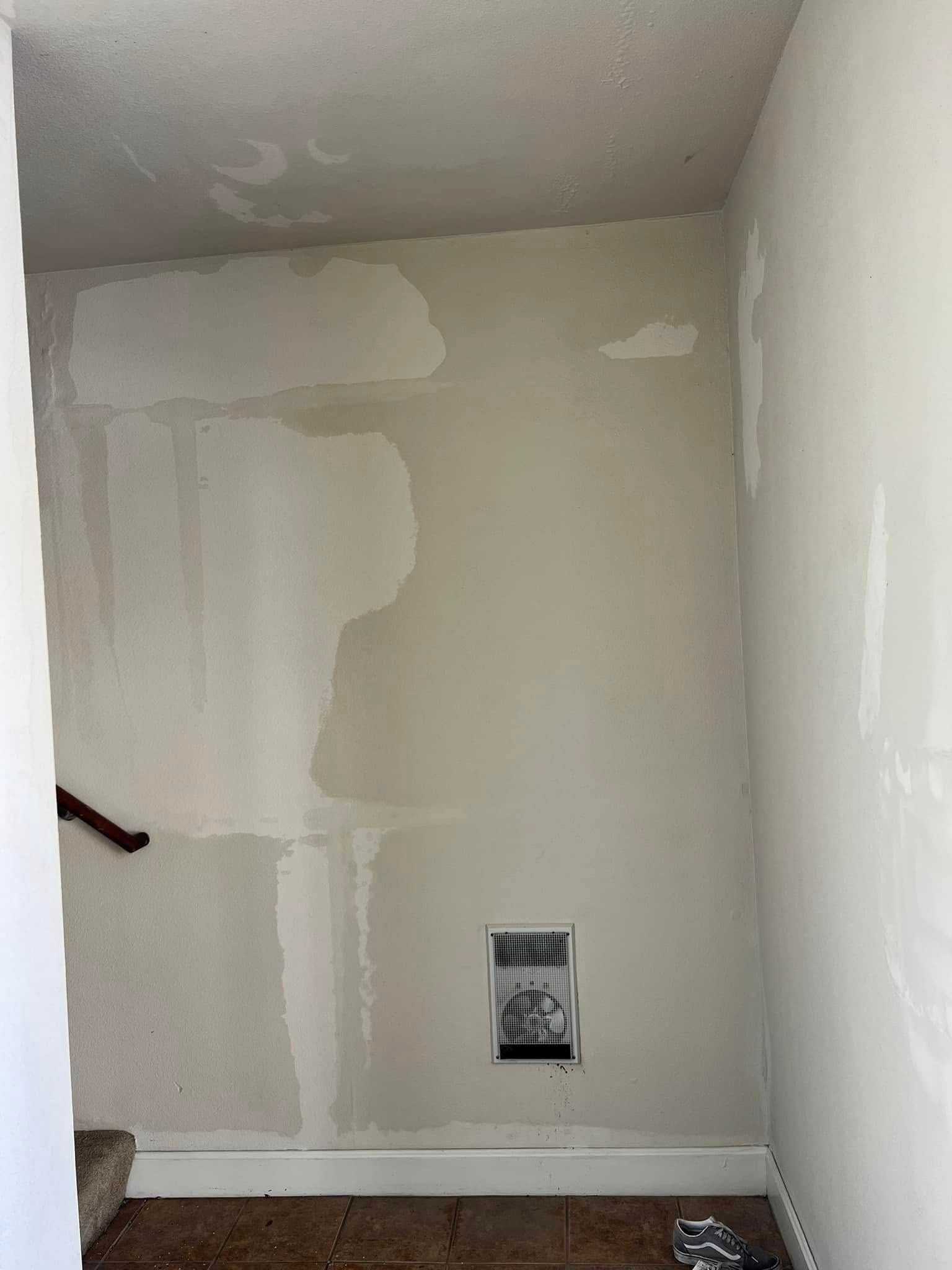
Repair work addresses damage from fastener pops, impact holes, settling cracks, and water stains that require cutting out affected sections and replacing them with new drywall. Joint compound is feathered outward from the repair site to blend with the surrounding wall, and texture is matched using spray equipment or hand tools depending on the existing finish. Efficient service minimizes disruption by containing dust, completing work in stages that allow for drying time, and coordinating with painting schedules.
Request a detailed estimate to assess wall damage and plan drywall repairs before painting begins.
What Changes After Drywall Finishing Completes
Drywall finishing involves multiple coats of joint compound applied over tape at seams and fastener dimples, with each coat wider than the last to create a gradual transition. Sanding between coats removes ridges and high spots, and a final pass with fine-grit paper smooths the surface so it feels uniform when you run your hand across it. Smooth finishing prevents the shadowing effect that occurs when light hits uneven joint compound from an angle.
Once repairs are complete, walls appear uniform with no visible patches, cracks, or texture differences. Paint adheres evenly without pulling away at edges or showing through thin spots where compound was not feathered properly. Water damage repairs eliminate the discolored rings and soft spots that indicate moisture has compromised the drywall core, and replaced sections are sealed to prevent future staining if minor leaks occur again.
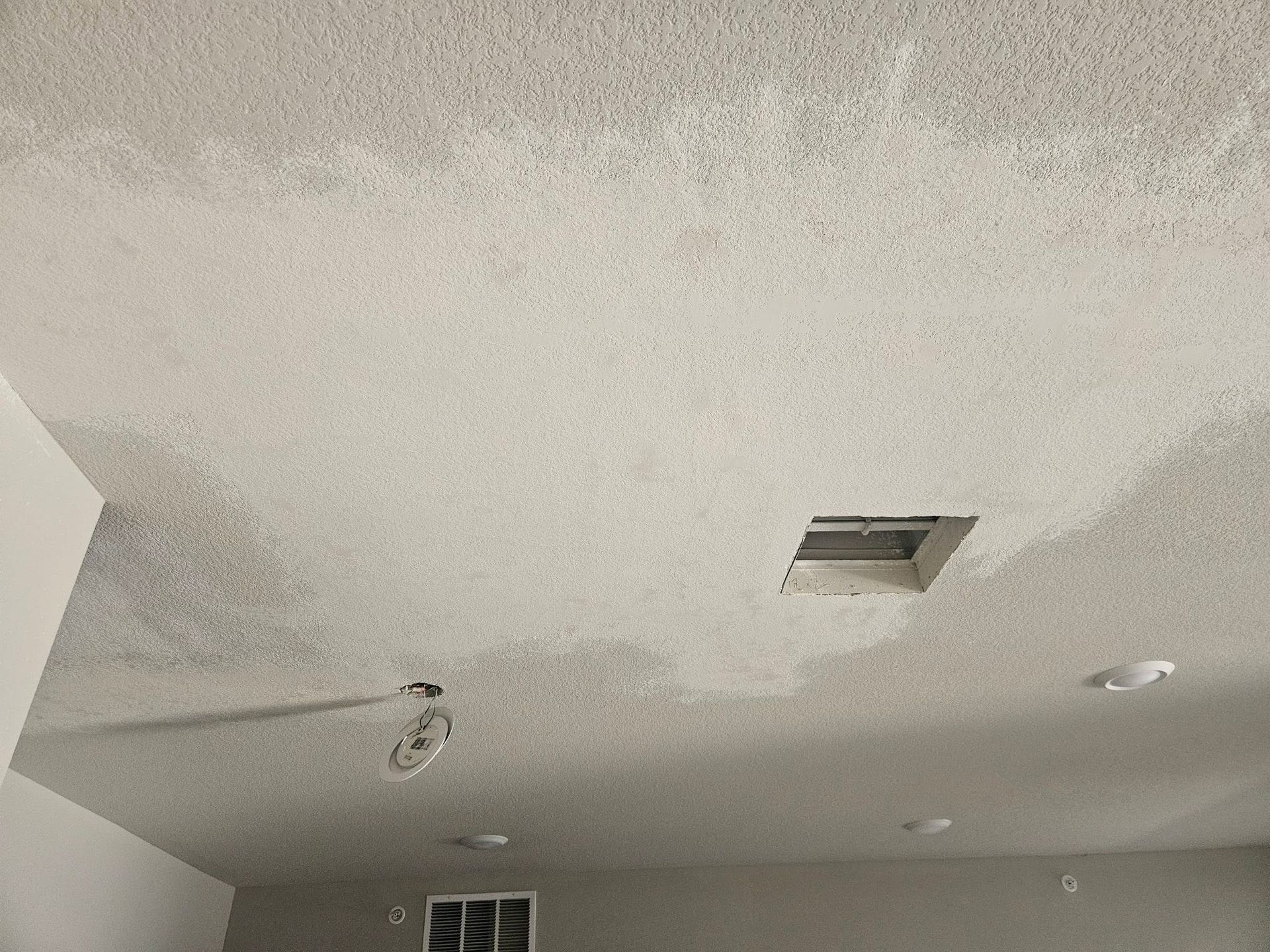
Texture matching involves replicating the spray pattern or hand-applied finish present on surrounding walls, using the same nozzle size and application technique to avoid obvious boundaries between new and existing texture. Seamless preparation supports quality paint finishes by providing a consistent surface that reflects light evenly and does not telegraph imperfections through the topcoat.
Answers to Frequent Drywall Questions
Property owners in Des Moines often need clarity on repair methods and drying timelines before scheduling drywall work.
What causes fastener pops in drywall?
Fastener pops occur when screws or nails back out slightly as the framing lumber dries and shrinks, pushing the fastener head through the joint compound and creating a small bump or crack on the wall surface.
How many coats of joint compound are required for a smooth finish?
Most installations require three coats: a taping coat that embeds the tape, a second coat that widens the joint, and a final coat that feathers the edges. Each coat must dry completely before the next is applied.
When does water-damaged drywall need replacement versus repair?
Drywall that feels soft, shows sagging, or has visible mold growth must be replaced because the gypsum core has lost structural integrity and will not hold fasteners or support paint.
How do you match existing wall texture during repairs?
Texture is matched by testing spray patterns or hand tools on scrap drywall until the appearance replicates the surrounding texture, then applying it to the repaired area while the joint compound is still slightly damp.
What is the timeline for drywall repairs before painting can begin?
Small repairs dry within 24 hours, but larger patches with multiple coats of joint compound may require two to three days depending on humidity levels and ventilation in the space.
TNT Painting & Remodeling LLC provides efficient drywall installation and repair with minimal disruption to residential and commercial properties. Contact us to schedule a free estimate and review your wall preparation needs.